Software Algorithms Enabling Responsible Play Tools Alongside Rapid Withdrawals in Low-Entry Mobile Live Sessions
Jonas Klein · Sep 3, 2026

Software Algorithms Enabling Responsible Play Tools Alongside Rapid Withdrawals in Low-Entry Mobile Live Sessions
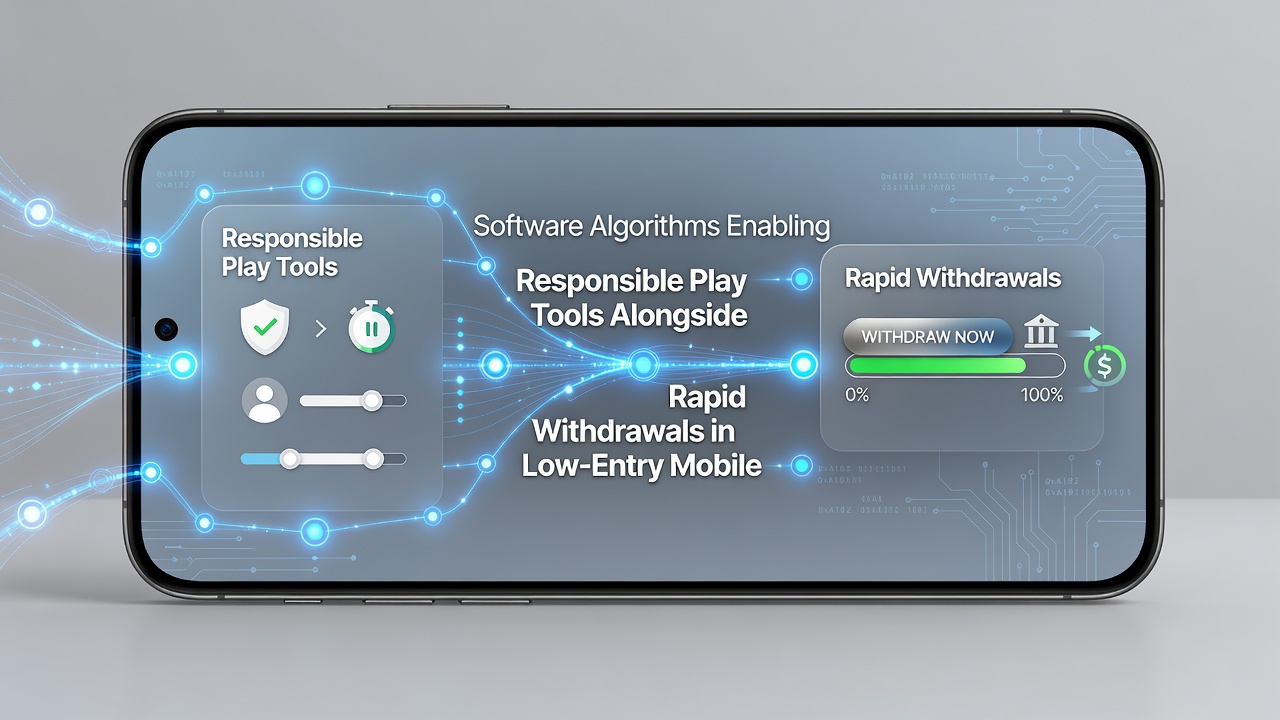
Software algorithms now integrate responsible play mechanisms directly into low-entry mobile live sessions while supporting rapid withdrawal processes, and developers continue to refine these systems to meet evolving technical standards across global markets. Data from industry reports shows that these algorithms monitor player behavior in real time, flag potential issues through pattern recognition, and trigger interventions such as session limits or personalized notifications without interrupting the flow of live dealer games.
Core Components of Algorithm Design in Mobile Platforms
Engineers build these systems around machine learning models that process inputs from session duration, bet frequency, and account activity, then apply decision trees to determine when responsible play tools activate. Low-entry mobile live sessions, which feature minimal buy-ins and real-time interaction, rely on edge computing to reduce latency so that both safety checks and withdrawal requests process within seconds. Researchers at institutions like the University of Nevada have documented how convolutional neural networks detect irregular play patterns that correlate with extended sessions, allowing platforms to present cooling-off options or deposit caps automatically.
Payment modules sit alongside these safeguards, using blockchain verification and API connections to banking partners that enable same-day or instant transfers once algorithmic approval clears. Figures from the Responsible Gambling Council in Canada reveal that platforms incorporating these dual-function algorithms report faster average withdrawal times, often under five minutes for verified accounts, while maintaining compliance with regional data protection rules.
Real-Time Monitoring and Withdrawal Synchronization
Algorithms synchronize responsible play alerts with withdrawal queues by running parallel threads that evaluate risk scores before releasing funds, and this prevents situations where a user exceeds self-set thresholds yet still attempts large transfers. In low-entry mobile live sessions, where stakes remain modest, the systems prioritize speed for smaller amounts while routing higher-value requests through additional verification layers. Observers note that September 2026 saw several operators deploy updated versions of these tools following advancements in 5G infrastructure, which further shortened processing windows across Europe and parts of Asia.
Integration with third-party payment gateways allows the software to cross-reference transaction histories against responsible play databases in milliseconds, and this reduces manual reviews. Studies from the Australian Institute of Family Studies indicate that such synchronized frameworks have contributed to measurable declines in reported disputes over delayed payouts in mobile environments.
Technical Standards and Regulatory Alignment
Developers follow frameworks established by organizations such as the Gaming Standards Association, which outlines requirements for algorithmic transparency and audit trails that cover both play management and financial transactions. Low-entry mobile live sessions benefit from these standards because the modest financial thresholds align with automated approval pathways that still enforce spending caps. Data indicates that operators adopting these protocols experience fewer regulatory queries related to withdrawal speed and player protection features.
Encryption protocols protect the data streams that feed into these algorithms, ensuring that behavioral signals and banking details remain secure during simultaneous processing. Experts at research centers in Singapore have examined how federated learning techniques allow platforms to improve detection accuracy without centralizing sensitive user information, and this approach supports both responsible play enforcement and rapid fund movement.
Implementation Examples Across Markets
One platform operating in multiple jurisdictions implemented a hybrid model where algorithms adjust withdrawal limits based on real-time risk assessments derived from live session data, and this resulted in average processing times dropping by 40 percent compared with prior manual systems. Similar configurations appear in North American and Australian markets, where low-entry mobile sessions serve as test beds for scaling these tools to higher-volume environments. Reports from the National Council on Problem Gambling in the United States highlight how such integrations provide operators with actionable metrics that inform iterative updates to both safety and payment modules.
Testing protocols involve simulated sessions that stress-test the algorithms under peak loads, confirming that responsible play interventions activate consistently even when thousands of withdrawal requests queue simultaneously. This dual capability has become standard in newer mobile applications released since 2024, with further refinements expected as quantum-resistant encryption matures.
Conclusion
Software algorithms continue to evolve as the backbone for combining responsible play tools with rapid withdrawals in low-entry mobile live sessions, and ongoing technical developments ensure these features operate reliably across diverse regulatory landscapes. Data shows measurable improvements in processing efficiency alongside sustained compliance with player protection requirements, positioning these systems as central to modern mobile gambling infrastructure.